
Governance
If AI shaped the decision,
someone must answer for it.
For a leadership team, the question is not whether AI is capable. It is whether you can answer for what it does. Governance is how you answer: written rules, a named owner, and a record you can show.
Questions your board will ask
Six questions.
Straight answers.
Who is accountable?
A named person, for every AI-influenced decision that matters. When AI shapes a hire, a price, a claim or a client message, one human can explain it and stands behind it.
What may AI touch?
Only what has been decided in advance and written down: which tools, which data, which systems. If it was not granted, it is not allowed. The rule lives in policy and in the tools’ own settings, not in anyone’s good intentions.
What may it do without asking?
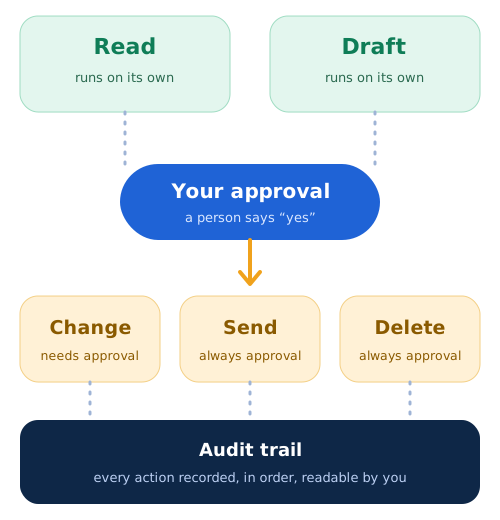
Read and draft. Looking things up and writing a first version are safe to leave running. Every step beyond that stops for a person’s yes.
How do we know what happened?
Keep a record: what AI was used for, who reviewed the result, and what was decided. Written in plain language, kept in order, and available when a board, a client or an insurer asks.
How do we stop it?
Someone has the authority to pause a use, turn off a tool or pull back an access, and everyone knows who. A rule you cannot enforce is only a wish.
What if it is wrong?
Plan for it. Review before use, sources on anything that matters, unverified facts flagged for checking, and a simple way for people to report a problem without fear.
The permission model
Four levels. Always the same.
Read
Looks things up and gathers information.
Can run on its ownDraft
Writes emails, reports and plans for a person to review.
Can run on its ownChange
Updates files, calendars, tasks and records.
Needs approvalSend or delete
Anything that leaves the building, or cannot be undone.
Always approvalControls at a glance
What good governance puts in place.
Earned, not assumed
Trust is promoted
one use at a time.
Every new use of AI starts with approval on. When one has proven itself safe, a person can choose to let it run without asking. The decision is theirs, it applies to that one use only, and it can be taken back. Nothing is promoted on its own.
Where to start
Start with what is already in use.
AI governance review
Find the AI in use, name the owners and write the rules.
See what is included → Free to adaptA sample AI use policy
One plain page you can adapt today.
Read the sample → Keep it safeSecurity basics
What stays home, what goes out, and where the real risks are.
Read the security detail →Straight answers
Questions owners ask me.
Is this a compliance certification?
No. I am not a lawyer, and this is not a certification or legal advice. It is a working set of controls and a plain-language policy, built so your leadership can answer for AI use. Have your counsel review it for your industry.
Can we show how AI-assisted work was checked?
Yes, if you keep a simple record: what AI was used for, who reviewed the result and what was decided. That record is what you show a board, a client or an insurer.
Does governance slow people down?
Not when it is written in plain language. Reading and drafting can keep running on their own. Only changes, sends and deletes wait for a person, which is where a mistake costs the most.
Does AI replace people?
No. Governance keeps people in the decisions. AI takes on reading, research, drafting and follow-up so your team can spend time on judgment and relationships.
Where do we start?
With the AI already in use and one page of rules. A 20-minute call tells you which to do first, even if we never work together.
Start here
One short call.
You leave knowing what to govern first.
Twenty minutes. Tell me what you want AI to do and we decide what it is allowed to do. No pitch theater, and you can stop at any point.
Book a 20-minute call → Or send an email →